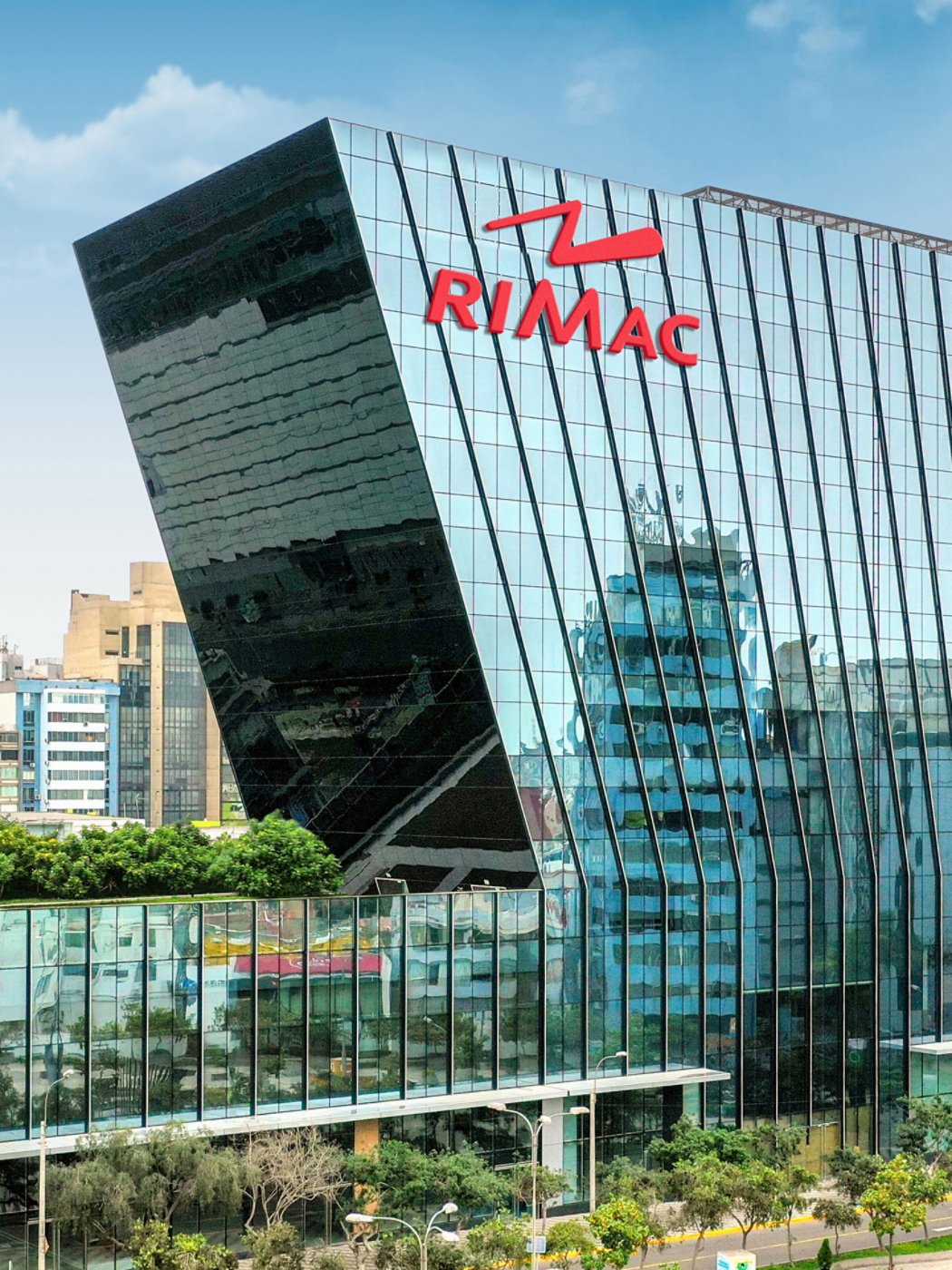
For more than 130 years, RIMAC Seguros y Reaseguros S.A. has protected individuals and businesses across Peru. As the country’s largest insurance provider, it offers a comprehensive portfolio of insurance and reinsurance products, including auto, health, life, multi-risk, and liability coverage, as well as annuities. For both individual and corporate clients, reliability is not optional, it is essential.
Insurance is fundamentally a trust-based business. That is why services must be available at all times, day or night, precisely when customers need them most. For RIMAC, this means ensuring its systems operate without interruption or digital latency, delivering a consistent, always-on experience across all digital channels, 24 hours a day, 7 days a week.
“We offer a better future,” says Carlos Herrera, Executive Vice President of IT and Data at RIMAC. “When the unexpected happens, whether it is an accident, an illness, or disasters such as fires or floods, our customers expect us to be there immediately. Our systems simply cannot fail.”
Herrera explains that the insurance business is inherently complex, driven by the continuous assessment of future event probabilities and the mechanisms through which losses are covered. Customers contribute to a shared pool used to pay claims, while operating within tight margins. As a result, the underlying technology must support highly data-intensive and analytics-driven operations.
RIMAC takes pride in a long-standing culture of innovation to meet evolving customer needs and expectations. Most recently, the company launched its own agentic web, the first agent-based website in Peru, enabling customers and prospects to explore products, review coverage conditions, and initiate policy purchases through an intelligent, guided digital experience.
However, sustaining leadership in a digital-first world requires a technology foundation that can continuously adapt and scale at speed.

“Technology and innovation have always been part of our DNA,” Herrera explains. “But innovation requires change not only externally, for our customers, but internally as well.”
Like many long-established organizations, RIMAC faced a significant technology challenge. Several of its core systems had been in operation for decades, creating limitations in scalability, flexibility, and integration. Legacy platforms increased operational risk and made it difficult to introduce new digital services for customers or seamlessly connect with its broader ecosystem of partners, including banks and healthcare providers.
By transitioning toward a continuous modernization model, RIMAC chose to move forward decisively, embracing transformation to deliver a more agile and responsive digital experience to its customers.
As a first step, RIMAC sought strategic enhancements across both its infrastructure and core systems, while preserving the high levels of reliability its customers depend on. The objective was to build a flexible and secure architecture capable of supporting next-generation digital experiences, enabling real-time insights for instant risk assessment, policy personalization, fraud detection, and the acceleration of emerging technologies such as agentic AI, all while ensuring cost efficiency.
Modernizing RIMAC’s environment required addressing the most complex technology landscape in the company’s history.
Several core insurance systems, spanning auto, health, and life lines of business, were highly interdependent and managed vast volumes of sensitive customer data. Over time, these systems became tightly coupled, with processes and data flowing across multiple applications and platforms. Transforming them required carefully decoupling these dependencies while ensuring uninterrupted business continuity.
The challenge was significant. We are a company with a long history, operating systems that are 20 to 25 years old, which limited our ability to scale.
“The challenge was significant,” says Gustavo Zuazo Cortez, Vice President of Technology Architecture, RIMAC. “We are a company with a long history, operating systems that are 20 to 25 years old, which limited our ability to scale.”
The scale of the data environment added another layer of complexity. Core systems contained large transactional volumes that had to remain synchronized throughout the migration, with every record validated to ensure complete accuracy.
At the same time, RIMAC was already operating within a multi-cloud environment: Amazon Web Services supported its digital channels, while Google Cloud Platform powered analytics and data platforms. To modernize its core transactional systems, RIMAC selected Oracle Cloud Infrastructure and Exadata, leveraging the performance of Oracle’s database platform and integrating it into its existing multi-cloud architecture. Oracle systems were chosen for their high availability and automated management capabilities, enabling the execution of mission-critical and analytics workloads at scale.
Integrating these environments required meticulous planning to ensure secure connectivity, consistent data flows, and seamless interoperability across platforms, while maintaining the availability and reliability expected by customers.
Achieving this vision required more than a technology upgrade. It demanded a partner capable of working side by side with RIMAC’s IT team to orchestrate a complex transformation without disrupting business operations.

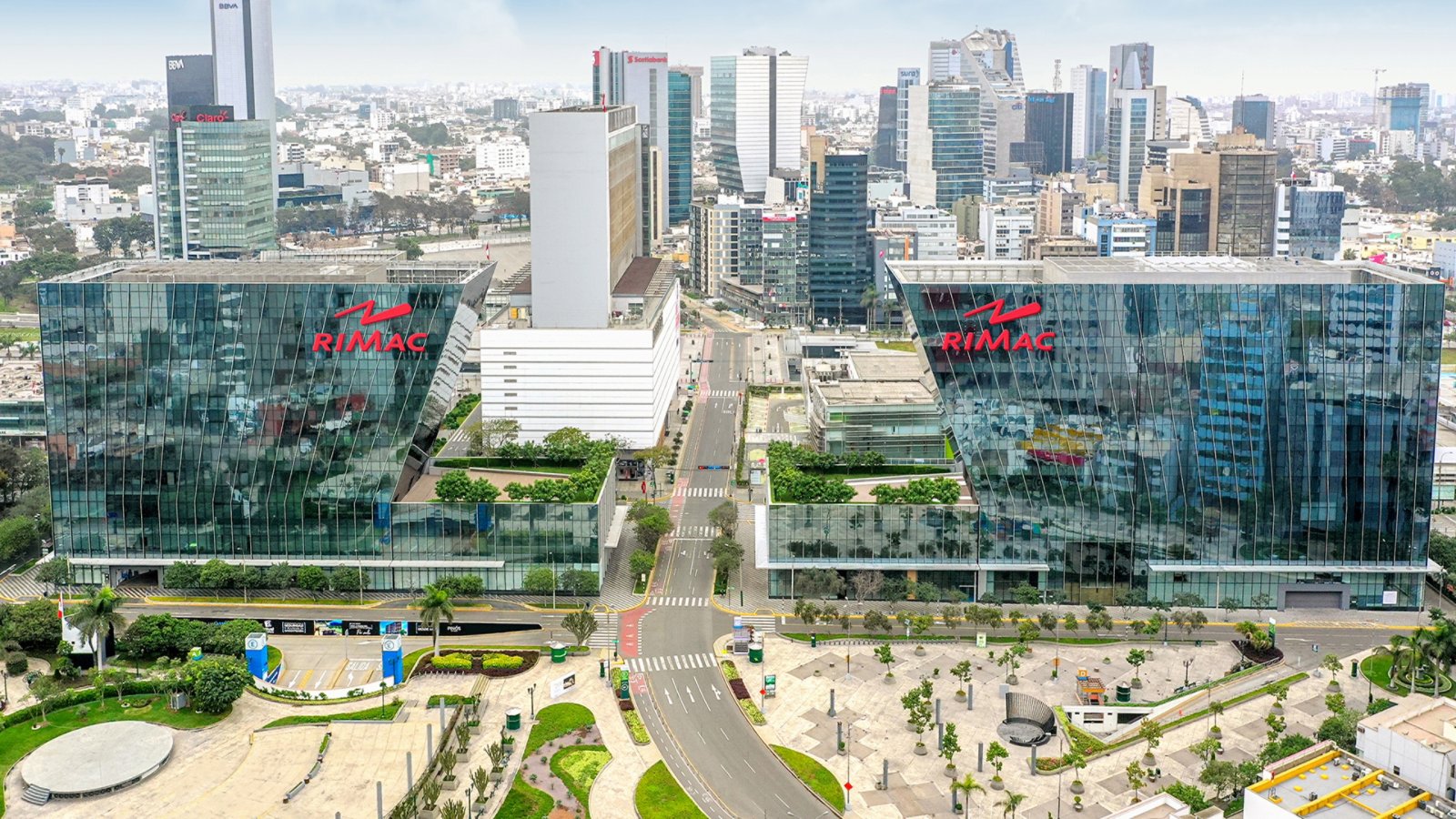
RIMAC selected Kyndryl for its deep understanding of the company’s existing systems and its ability to manage complex legacy technologies while guiding modernization. This partnership, built over years of collaboration, gave RIMAC the confidence that Kyndryl could lead an ambitious technology transformation.
Working closely with RIMAC, Kyndryl Consult designed a modernization strategy that balanced innovation with operational stability.
Together, the teams defined a detailed roadmap to modernize core technology platforms while maintaining continuous service for customers. The approach combined architectural redesign, rigorous testing, and phased migrations over a 15-month period to minimize risk throughout the transformation.
Kyndryl specialists across infrastructure, applications, networking, data and analytics, and security came together to build and execute the migration plan.
The transformation included migrating legacy servers to Oracle Exadata, upgrading databases to Oracle 19c, modernizing Oracle Forms applications, and integrating workloads into a secure multi-cloud architecture spanning Oracle Cloud Infrastructure, AWS, and Google Cloud Platform.
“We migrated more than 55% of our transactional workload, including the most critical and complex systems, to the cloud. These were not the ‘easy’ systems, they were the core of the company,”
“We migrated more than 55% of our transactional workload, including the most critical and complex systems, to the cloud. These were not the ‘easy’ systems, they were the core of the company,” said Gustavo Zuazo Cortez.
To mitigate risk, the teams conducted extensive testing and validation, including full-scale rehearsal migrations in isolated environments prior to final production cutovers. These rehearsals helped identify and resolve issues early, ensuring seamless transitions without impacting customer services. For example, RIMAC needed to ensure that its end-to-end automated process, from claim registration to healthcare service delivery and bank payment, operated seamlessly. In some cases, Kyndryl refactored applications to make them cloud-native and scalable, resulting in more stable and reliable claims processing.
Throughout the project, RIMAC, Kyndryl, and Oracle teams worked in close alignment to identify risks early and resolve challenges quickly. Security was further strengthened through policies ensuring that each ecosystem partner had access only to the customer data required, along with enhanced encryption and additional firewalls between internal and external networks. Dedicated war room sessions helped maintain alignment across technical teams and leadership.
“We often described it as a three-legged stool, RIMAC, Kyndryl, and Oracle working together toward the same goal,” Zuazo explained.
This close collaboration enabled the transformation to progress smoothly, even as new requirements emerged, such as integrating additional cloud services, adapting to evolving platform capabilities, and managing complex dependencies across core systems.
“Oracle even introduced a new version of Exadata midway through the project, increasing complexity, but Kyndryl rose to the challenge,” noted Herrera.
The modernization program delivered immediate performance improvements while establishing a strong foundation for RIMAC’s continued innovation. The gains in performance have been significant.
“Response times for many processes have been reduced to a third, and in some cases even to one-fifth of what they were before,” said Herrera.
The new architecture also enhances scalability and resilience, enabling RIMAC to dynamically adjust compute resources based on demand and respond more quickly to evolving business needs. Disaster recovery capabilities were also strengthened, with multi-region replication and faster failover times, helping ensure business continuity in the face of unexpected events.
Equally important, the transformation established a modern technology foundation that allows RIMAC to continuously evolve its digital capabilities. With core systems now operating in a flexible multi-cloud environment, the company can more easily introduce data-driven and automation initiatives.
RIMAC teams are already exploring next steps to modernize data pipelines and expand analytics capabilities through their data lake. These efforts will enable deeper insights from both operational and customer data, supporting faster, data-driven decision-making.
The company is also evaluating AI-enabled operational automation, including intelligent service desk capabilities and automated incident response, to further enhance system reliability and reduce operational complexity.
“Automation is the next frontier, leveraging operational data to prevent or automatically respond to incidents,” said Herrera. “This project proved that we can think big and deliver. Today, we have the right partner to support our transformation vision for the years ahead.”
This project proved that we can think big and deliver. Today, we have the right partner to support our transformation vision for the years ahead.