Watch IIS La Fe's story
La Fe Health Research Institute (IIS La Fe), affiliated with La Fe University and Polytechnic Hospital, one of Europe’s leading healthcare institutions, has developed medical imaging capabilities that extend far beyond conventional diagnostic applications. Through the Biomedical Imaging Research Group (GIBI230) and the Experimental Radiology and Imaging Biomarkers Platform (PREBI), imaging plays a central role in precision medicine, enabling disease prevention and treatment strategies tailored to each patient’s unique phenotype profile. Every day, nearly 1,100 patients are examined within the highly complex radiology and nuclear medicine environment, supported by advanced imaging technologies. GIBI230 also includes 50 researchers dedicated to the development of AI-driven imaging biomarkers, while PREBI incorporates advanced devices and imaging prototypes.
While the institute had already achieved scientific progress, Dr. Luis Marti-Bonmati and his team sought to further accelerate the translation of research into clinical practice. Their objective was ambitious: to reduce the time required for research outcomes to reach bedside patient care from 10 to just 2 years.
Achieving this vision would require the rapid integration of data pathways for secondary use and AI models into clinical workflows. Developed imaging biomarkers needed to become explainable, reproducible and clinically actionable. At the same time, the imaging research group aimed to expand the scope and scale of the existing repositories from hundreds of patients to tens of thousands of imaging data points. This transformation would also strengthen the construction of the network by enabling shared research infrastructures and fostering broader collaboration with more than 90 external researchers and over 200 associated entities. Even more, biomarker discovery and predictive AI models require the integration of imaging, clinical, molecular, genetic, and clinical data to be more robust and explainable. Therefore, the group would need to expand its capabilities in data integration and the development and validation of AI models.
The IIS La Fe existing data lake was insufficient to support this projected growth due to limited capabilities, inadequate cooling systems, and lack of redundancy. The facility also lacked essential fire protection systems, secured access control and adequate monitoring systems. In addition, monthly maintenance interruptions halted processing activities entirely. Researchers frequently relied on personal laptops running computations over the entire weekend to obtain biomarker analysis results, despite the substantial risk of computational failures and even with lighter system workloads.
For the research group, the challenge was to accelerate transformative biomedical research through the deployment of a new high-performance computing data center (HPC-DC) with resiliency, secure by design and capable of operating within the demanding environment of a fully-functioning, trusted research environment, all within a highly compressed implementation timeline.

For Dr. Marti-Bonmati and the imaging biomarkers researchers at IIS La Fe, the vision extended beyond the deployment of faster computing capabilities.
“Accelerating our projects from platform to market and clinical adoption was a core priority. Through imaging biomarker, precision medicine has the power to meaningfully reduce patient misdiagnoses and ineffective treatments; outcomes that matter deeply to me and to the patients we serve,” he stressed.
At the same time, the institute plays a strategic role within the European research ecosystem. As a node in distributed biomedical imaging networks and a future federated node within the European Federation for Cancer Images (EUCAIM), the group required an infrastructure capable of delivering enterprise-grade security, scalability and full compliance with strict European health data regulations.
The scope and design of the new supercomputing environment reflected the scale of the institute’s scientific ambition and commitment to patient-centered innovation. The key objectives included:
- A secure processing environment of highly sensitive patient data
- A scalable infrastructure prepared for exponential AI growth
- An open data center design conceived as a flagship of the institute, serving as a space for scientific outreach
- A platform that enables digital twins as virtual models integrating imaging, biological, and clinical data in real time
- A smaller data center footprint, lower energy consumption, decreased data center costs, and reduced noise levels.
- Support of next-generation graphic-intensive workloads with fully redundant facilities incorporating liquid cooling technology.
- Integration with European federated research environments
This initiative represented more than the construction of a new data center. It constituted a strategic and foundational investment in the future of precision medicine.

The development of a high-performance data center at IIS La Fe presented an exceptionally complex operational and engineering challenge.
IIS La Fe required completion of the entire design phase in just one month, followed by full data center construction and deployment within seven months, all under strict cost-control conditions that allowed no budget overruns. The project needed to comply with detailed hardware specifications, hospital operational requirements, supervisory engineering directives and regional healthcare authority regulations. Translating these multiple constraints into a coherent, technically robust and executable solution within such a short timeframe represented a significant execution challenge.
Operational flexibility throughout the execution phase was critical. The solution not only had to meet initial design requirements but also adapt continuously to the realities of operating within a fully functional hospital environment. This included maintaining strict controls over dust emissions, noise thresholds and operational impact. Construction and deployment activities frequently had to be coordinated around patient care schedules, often requiring work to be performed during afternoons or nighttime hours while ensuring uninterrupted project progress.
Kyndryl’s extensive experience in building resilient and secure data centers and their adaptability and speed in designing the proposal really stood out.
Security and compliance requirements were equally demanding. European regulations governing clinical data demanded robust governance frameworks, strict access controls mechanisms and secure processing environments capable of protecting sensitive patient information.
Resilience was essential. Previously, monthly electrical testing procedures required system shutdowns for approximately one hour. Such interruptions were incompatible with the continuous operation demanded by advanced AI workloads. At the same time, the infrastructure needed to be designed with long-term scalability in mind. While the institute’s immediate operational load was approximately 50 kW, the new environment had to support future expansion to 250 kW and beyond, with full redundancy integrated into the design from the outset.
The solution had to be secure, scalable, silent, energy-efficient – all while being implemented without disrupting patient care activities.
“We were looking for a technological partner capable of accompanying us from design through final delivery of the data center infrastructure needed to cover all our computational requirements,” explained Amadeo Ten Esteve, Head of Infrastructure and Applications at IIS La Fe. “Kyndryl’s extensive experience in building resilient and secure data centers and their adaptability and speed in designing the proposal really stood out.”
Together, Kyndryl and IIS La Fe co-developed a state-of-the-art supercomputing data center designed as a strategic platform for advancing healthcare research and innovation.
At the core of the solution lies robust architecture based on security, resilience, and dependable operations. Redundancy was integrated into every critical infrastructure layer to ensure uninterrupted availability, even in the event of unexpected failures. This included Uninterruptible Power Supply (UPS) systems, backup power and cooling, generator support using the hospital’s existing infrastructure, and layered physical security, such as dual‑factor access controls systems, designed to protect highly sensitive research environments.
To support advanced AI and graphics processing unit (GPU) workloads, Kyndryl implemented an advanced liquid cooling strategy based on Rear Door Heat Exchangers (RDHx). This approach significantly improved energy efficiency compared with conventional hot/cold aisle cooling configurations. Cooling was delivered through two 125 kW chillers providing both high performance and resilience while also allowing future scalability through the integration of an additional third chiller as computational demand increases. The infrastructure was future-proofed with Direct Liquid Cooling (DLC), ensuring compatibility with next-generation GPUs requiring direct-to-chip liquid cooling technologies.
The data center was also equipped with a comprehensive ecosystem of supporting systems to guarantee safe, efficient and intelligent operations. These included early fire detection and automated suppression systems, a dedicated smoke extraction system, advanced monitoring and control platforms, and leak detection systems to protect critical infrastructure. Physical security was reinforced through integrated access control and IP- surveillance cameras. The IT environment incorporated high-density racks and intelligent power distribution units (PDUs), enabling real-time monitoring visibility and optimization of energy consumption.
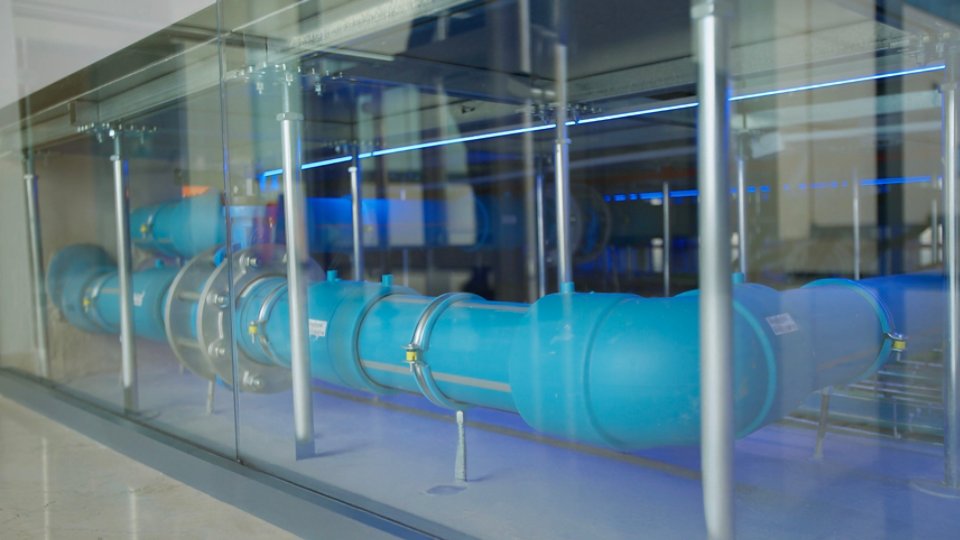
Energy efficiency was embedded into the design from the start. The facility incorporates continuous power usage effectiveness (PUE) monitoring, with expected values below 1.3 at full IT load, reflecting the combined impact of advanced cooling technologies, optimized power distribution and real-time operational insight.
Beyond technical performance, Kyndryl designed the data center to be a visible symbol of institutional modernization and innovation. Its glass-enclosed structure, strategically located along one of the busiest corridors, serves as a tangible representation of IIS La Fe’s commitment to transparency, scientific leadership, and future-ready healthcare.
As the project progressed, additional requirements around dust remediation and noise control emerged, requiring modifications to the original project design. Managing these evolving needs while maintaining alignment with all stakeholders added substantial complexity. Delivering the entire project under a turnkey model — on time and within budget — became one of the project’s defining achievements.
Kyndryl became another member of our team— working within tight public-sector budgets and timelines to deliver a resilient, future-ready data center.
Kyndryl orchestrated all construction and deployment activities while minimizing patient disruption and protecting clinical environments. Kyndryl prioritized dust mitigation, recognizing that dust may act as vectors for bacteria, viruses, and fungal spores, causing healthcare-associated infections (HAIs), especially among immunocompromised patients.
Throughout the project, Kyndryl successfully maintained strict noise-threshold requirements. A significant proportion of the work was scheduled during afternoons and evenings to further reduce operational disruption. During execution, additional acoustic insulation requirements were introduced and successfully integrated without impacting delivery timelines. Despite these constraints, Kyndryl completed the design and implementation within only eight months.
Ten Esteve described the working relationship as highly collaborative. “Kyndryl became another member of our team”— working within tight public-sector budgets and timelines to deliver a resilient, future-ready data center.
“Above all, it was Kyndryl's collaborative spirit that stood out. They took the time to truly understand what we needed, co-designed with us from the start, and adapted fluidly as our requirements changed. When challenges arose, they resolved them swiftly and appropriately. And that made all the difference.” said Dr. Martí-Bonmatí.

The impact of the new high-performance computing infrastructure has been both immediate and measurable.
Tasks that previously required researchers to leave personal laptops processing analytics throughout entire weekends can now be completed within hours, even when running significantly more advanced artificial intelligence models.
We used to spend an enormous amount of time computing, especially with volumetric data. Now, even with more complex AI architectures, we have accelerated results by a factor of 10, 20, even 100 times faster.
Monthly maintenance shutdowns have also been eliminated. Thanks to the data center’s fully redundant architecture IIS La Fe is now able to maintain uninterrupted operations and continuous computational availability.
The new infrastructure has accelerated clinical analysis. Imaging biomarkers can be validated faster, with improved reproducibility and explainability, while digital twins initiatives benefit from the computational capacity required to integrate thousands of simultaneous imaging, biological and clinical data streams. “Now we can work with populations of tens of thousands, and even millions of imaging data points,” said Dr. Martí-Bonmatí.
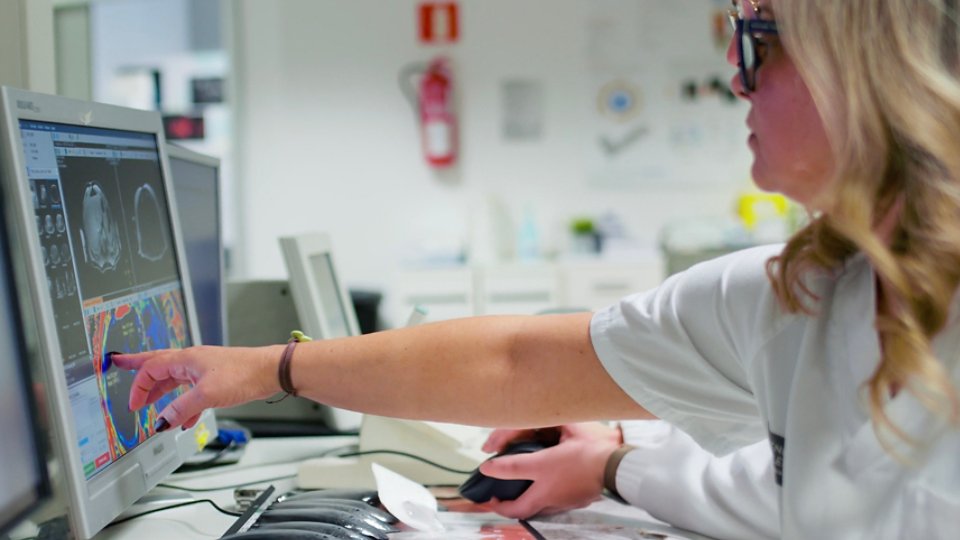
The new platform has also demonstrated rapid scalability. Within a few months of deployment, IIS La Fe expanded its GPU capabilities, integrating additional high-performance computing resources designed to support increasingly demanding AI workloads. The infrastructure was designed to accommodate next-generation computational models without requiring major architectural redesigns.
As a federated European research node, IIS La Fe is now positioned to collaborate at scale, securely sharing infrastructure and computational capabilities with research partners and associated entities across Europe.
For patients, these technological advances translate directly into tangible clinical benefits: faster diagnoses, more precise and personalized treatments, fewer unnecessary interventions, and more timely delivery of care.
Precision medicine is becoming increasingly accessible, reinforcing patient confidence in the quality and innovation capacity of IIS La Fe in their care journey.

To further progress, IIS la Fe is currently collaborating with Kyndryl to develop a comprehensive data management and governance strategy for advanced AI applications.
Dr. Martí-Bonmatí emphasized the strategic importance of establishing a robust AI framework capable of supporting activities such as documentation management, repositories and databases control, extraction of structural and organizational knowledge, labeling, and attributing metadata to the huge number of resources they manage. These capabilities are expected to improve research efficiency significantly and accelerate the generation of actionable insights for increasingly personalized patient protocols.
And, for the hospital, AI could help to improve hospital workflows such as appointment scheduling, examination management, protocols offered, and room occupancy times, increasing efficiency, lowering hospital costs and improving the admissions process.
The ultimate beneficiary is the patient. Better diagnosis means better treatment and fewer unnecessary interventions.
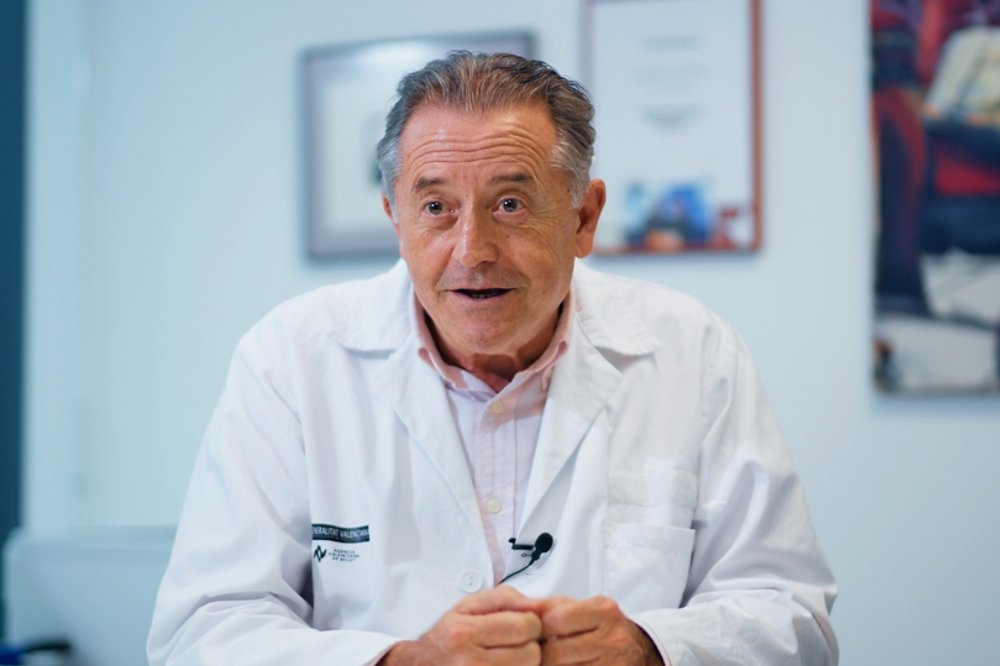
Dr. Luis Martí-Bonmatí
Director of Medical Imaging Department at La Fe University and
Polytechnic Hospital and Principal Investigator of GIBI230,
La Fe Health Research Institute (IIS La Fe)