
Security and resiliency
How strengthening AI governance can reduce risks
Article
Oct 15, 2026

Organizations need the right test environments to move from experimentation to implementation with AI. Through the Kyndryl AI Innovation Labs in Dallas (U.S.), Liverpool (UK) and Luxembourg (EU), Kyndryl provides customers with one-stop-shop environments for testing, along with the expertise to help them capitalize on innovation. The mandate for Kyndryl’s AI Innovation Labs extends beyond simply “building in” more AI functionality. The goal is to help customers create business value and capture return on their AI investments.
In this Q&A, Kyndryl’s Global Consult Lead Ismail Amla details how Kyndryl’s AI Innovation Labs are helping customers evolve their businesses from “AI curious” to “AI native.”

Kyndryl AI Innovation Lab
Liverpool
Kyndryl AI Innovation Lab
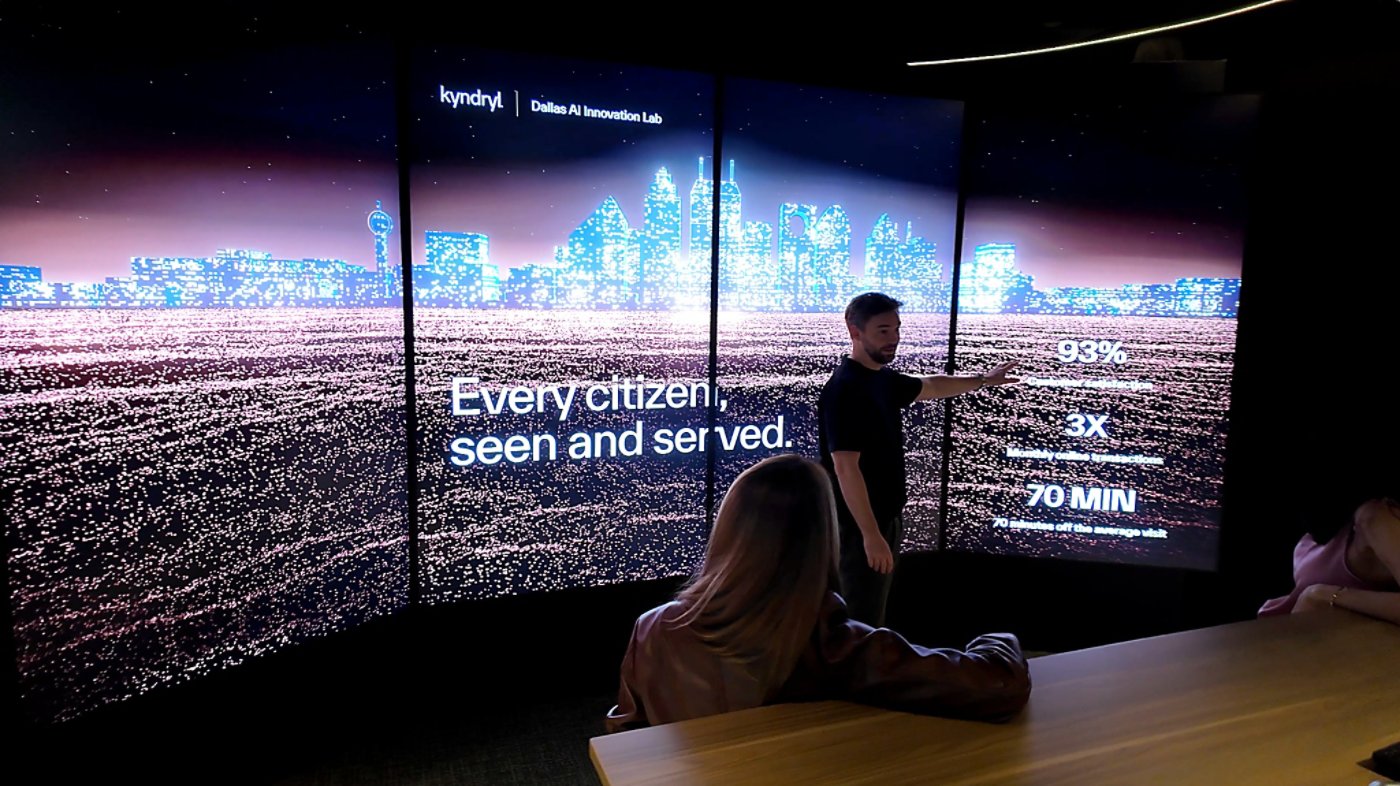
Dallas
Kyndryl AI Innovation Lab
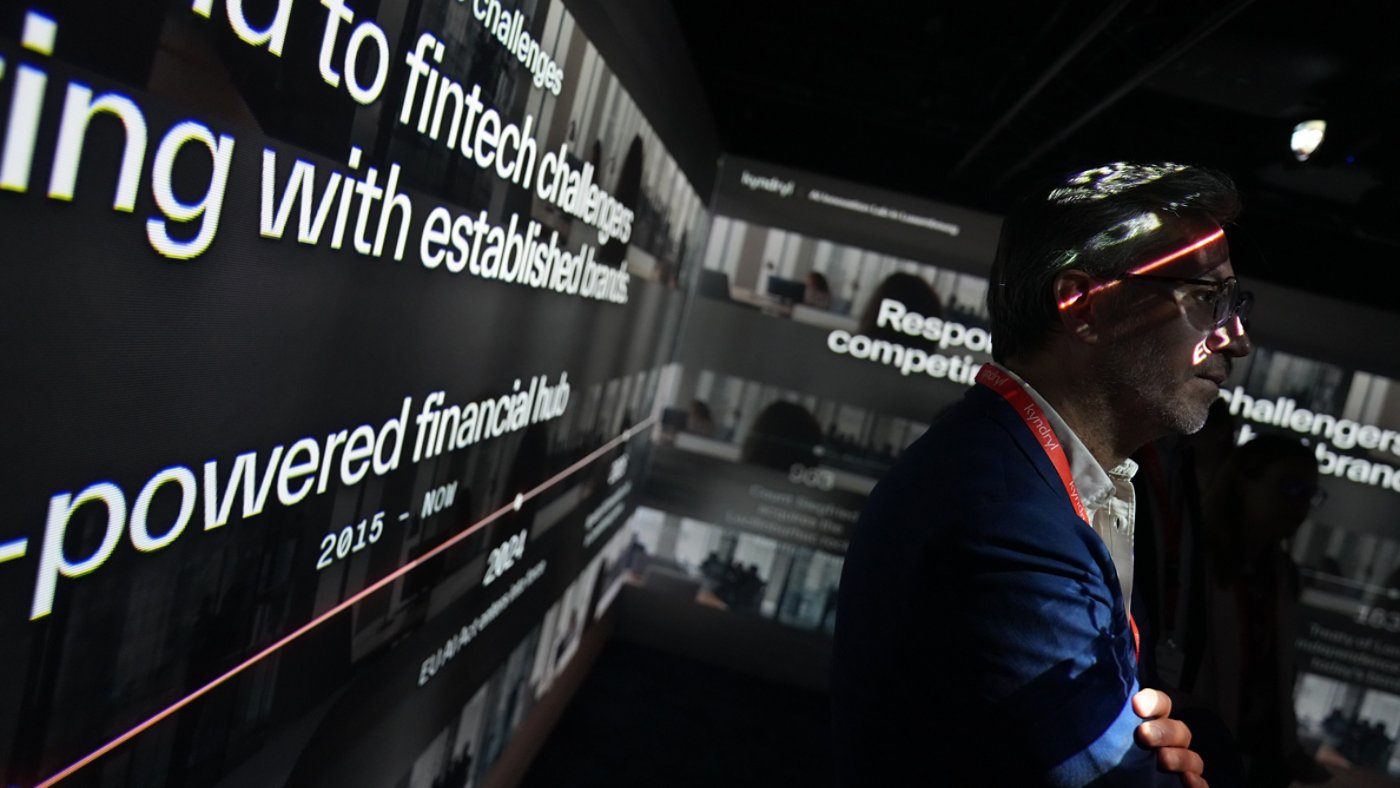
Luxembourg
Ismail Amla: The key is to follow the right sequence. Start by identifying your organization’s challenges and defining the results you want to achieve. It helps to look across each value chain, such as hiring-to-retiring, claim-to-settlement or order-to-cash, rather than a singular task. For each one, describe the results you want in business terms, for example, a new hire ready to work on their first day, a valid claim paid correctly, or an invoice sent correctly and paid on time. You need to understand your operations so you can pinpoint where you need to modernize and where infusing AI could help deliver results that the business and its regulators would accept. That’s the first step before you start drilling down into the technology.
Kyndryl’s AI Innovation Labs lead with this approach. Before the customer arrives, a use case is clearly defined based on their real-world business and technology challenges. The team then spends weeks meeting with the customer to prepare. We develop a deep understanding of their business, existing technology estate, operational processes, the specific challenge they are looking to solve, and the metrics and KPIs that matter most. This sets us up to immediately begin designing and co-creating to address actual needs instead of theoretical scenarios once the customer comes to our Lab.
AI is not a novelty for Kyndryl. It’s a toolkit that allows us to execute using cross-industry data from Kyndryl Bridge and mature insights shaped by decades of designing, building and managing complex IT systems for global enterprises.
Amla: Following the pre-work stage, our four-phase process of customer immersion, co-design, building and roadmap development begins with rapid prototyping. Kyndryl AI Innovation Labs are workspaces, not showcases. Our consultants, Forward-Deployed Engineers (FDEs), Human Systems Architects (HSAs) and Kyndryl Vital designers jump right in with the customer to create and test ideas that can run within their existing technology estate before committing to further development. Then we leverage the Kyndryl Agentic Framework to move quickly from concept to a working agentic solution, and create an implementation roadmap.
Typically, in less than two days in the Lab, we take the customer from visualization and discussion to co-creation and prototyping and provide a structured 30-, 60- and 90-day roadmap for implementation, production and scaling. By co-creating solutions with Kyndryl experts, customers walk away with something of genuine value grounded in their actual business use case. They leave with a clearer vision of not only what AI can do, but also how it will help get their business where it needs to be and a tangible understanding of how to move forward.
Customers walk away with something of genuine value grounded in their actual business use case.
Amla: While the ability to prototype is critical to advancing AI from concept to application and value, it isn’t the ultimate destination. Moving AI into everyday operations takes deep delivery expertise. Kyndryl has built this through decades of designing end-to-end services, operating mission-critical systems and modernizing IT estates to improve performance, enhance security and resiliency, and enable enterprise scaling.
In addition, the Kyndryl Agentic Framework and its policy-as-code capability enable us to embed trust, compliance and governance into the AI orchestrations we build for customers. Each action an agent takes is checked against the customer’s rules and recorded. And because we operate the AI Innovation Labs as a network, each customer benefits from everything we learn from each engagement — complementing the insights we gain from Kyndryl Bridge data. Ultimately, all of these capabilities and services come together to help organizations generate business value, deliver a return on investment and progress towards AI-native.
As AI agents move into everyday operations, organizations need to rethink how work gets done, how decisions are made and where human judgment matters. And that creates what might be the harder “second deployment” of AI: redesigning the organization around AI rather than simply taking it live.
As critical contributors to our AI Innovation Lab Teams, our FDEs and HSAs tackle this exact issue — not once the prototype is developed, but as it’s being designed and created. FDEs and HSAs evaluate how the enterprise actually works. They redesign roles, skills, workflows and accountability so people and AI work together to deliver business impact.
AI capabilities are evolving quickly, so the organizations that can keep up will be the leaders in this next phase. The question that enterprises need to ask themselves is whether they can reinvent how they work fast enough to turn enhanced AI capabilities into solid business value.