Smiling businessman discussing with colleagues over tablet PC in office
Applications

Better SAP transformation starts with better data decisions

20/05/2026 Read time: 1 min

3 key takeaways

  1. SAP transformation success depends less on the migration path and more on deciding which data is worth moving

  2. Ongoing modernization works when business leaders regularly review which data they still need to run the business and what can be retired

  3. AI makes it much easier to assess data, so transformation delays are more about leadership choices than time or cost

By Clay Caldwell, Rana Fares and Rahul Asai

During SAP transformation, deciding which data should move forward is just as important as deciding how it will move.

That distinction matters more than many organizations realize.

The migration approach you choose shapes timelines and budgets. Data scope decisions — what to keep live, retain or retire during transformation — determine whether the new environment delivers the outcomes the business needs. Move the right data forward and you create a cleaner foundation for process improvement, analytics and AI. Move the wrong data forward and you inherit the same problems and limitations you were trying to escape, just on newer infrastructure.

AI magnifies the risks, because it uses whatever data it’s given to make decisions faster and at greater scale than humans would. That means a S/4HANA environment filled with bad data becomes an engine for flawed outputs rather than a platform for trusted AI.

With more than 60% of SAP clients still on ECC with no clear path to S/4 HANA, data scope belongs at the top of leadership agendas. Organizations that treat it as a strategic decision will be better positioned to turn the move from ECC to S/4HANA into a source of value rather than another cycle of inherited complexity.

Smiling multiracial business colleagues discussing over laptop in office
Understanding the role data plays in the business allows teams to make informed choices about what to keep live, move under governance, archive or retire.

Modernization is now a continuous capability

Historically, many organizations treated modernization as infrequent, isolated events. A company would make a major platform move, stabilize the environment and then leave the estate largely untouched for years.

That model no longer matches the reality most companies face.

Leaders must now run, transform and optimize at the same time, with little or no business disruption. They’re expected to do so while navigating volatile markets, rapid AI adoption and a tougher regulatory landscape

Kyndryl’s 2025 Readiness Report underscores how quickly these pressures are reshaping strategy: 65% of enterprises have already changed their cloud strategies in direct response to geopolitical or regulatory demands, and nearly a third (31%) cite compliance as an active barrier to scaling technology investments.

With AI spending up 33% year over year and 61% of enterprise leaders under greater pressure to demonstrate positive returns, modernization can no longer be viewed as a one-time project. It must become an ongoing discipline that helps organizations adapt without destabilizing environments, driving up costs or creating governance gaps.

Data scope decisions determine whether the new SAP environment delivers the outcomes the business needs.

Data scope is a strategy decision

Many organizations frame SAP transformations as technology upgrades defined by migration path.

Brownfield, greenfield and selective approaches all have their place, but focusing too much on these labels can distract from the questions that matter most: What data is actively running the business? What must remain accessible for legal, audit or operational reasons?

When organizations treat data scope as a business decision rather than a technical afterthought, it shapes four outcomes that leaders value:
 

Programs move faster when teams reduce unnecessary volume early instead of managing avoidable complexity later. A smaller, better-defined data scope provides a firmer basis for delivery plans, testing decisions and change management.

Obsolete, inconsistent or poorly governed data creates compliance exposure and weakens traceability. Clear choices about what remains active, what’s retained for compliance and what’s retired create a more secure environment from day one.

Minimizing live data reduces infrastructure demand, processing overhead and maintenance effort. It also eliminates the hidden cost of carrying non-essential data and code into new environments.

 AI depends on data that’s current, governed and trusted. When this foundation is weak, confidence and performance decline.


The business impact emerges when organizations address data scope directly. Consider Dilip Buildcon, a leading infrastructure development company that was running SAP across more than 65 project sites with fragmented processes and limited enterprise visibility.

By standardizing workflows and improving data consistency, Dilip Buildcon achieved $7 million in annual savings, reduced working capital by 5% and doubled active project capacity without disrupting work in progress. These gains came from disciplined data decisions aligned to business priorities, not the migration alone.
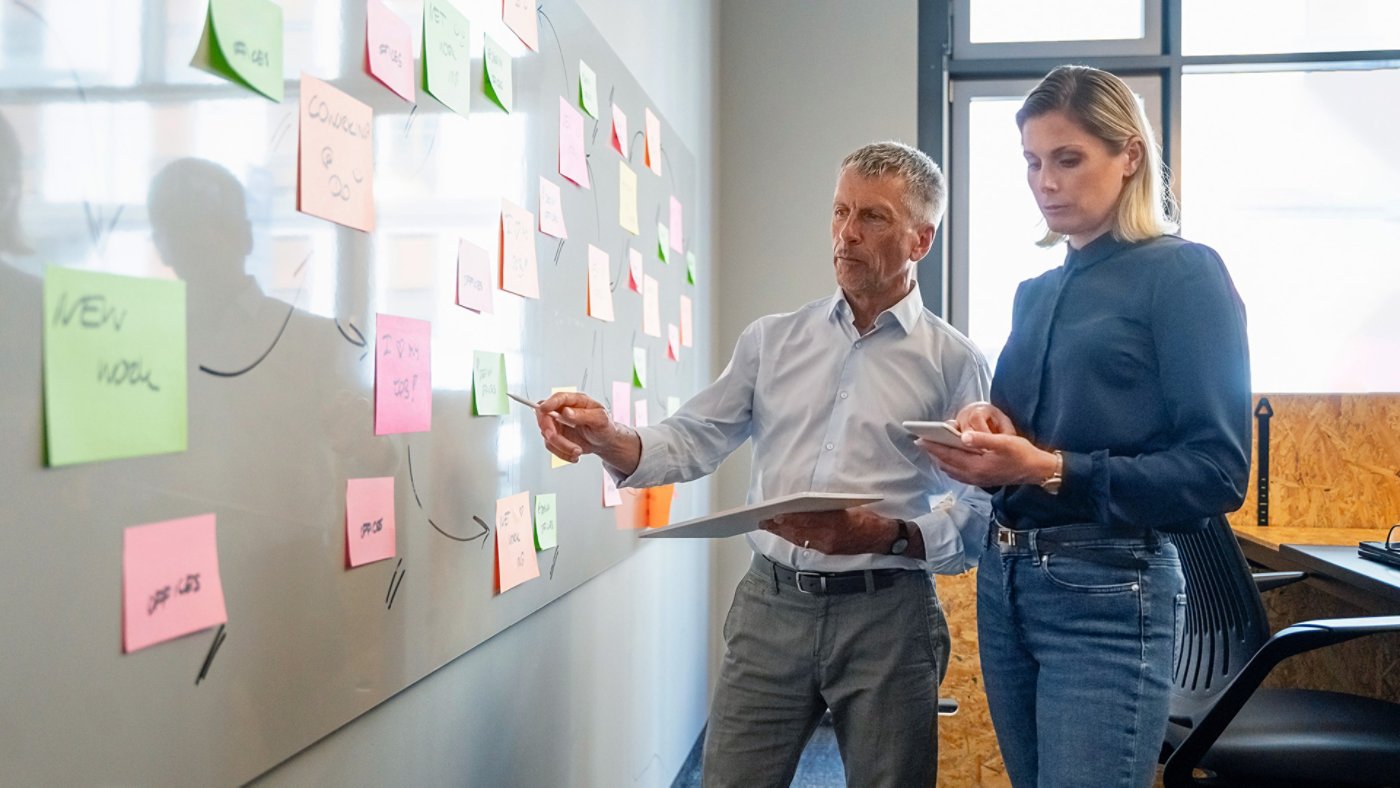
 

Senior businessman discussing over adhesive notes with colleague using smart phone in office
With AI spending up dramatically enterprise, leaders must view modernization as a continuous process.

Speed, guardrails and the role of AI

As transformation cycles accelerate, the cost of mistakes rises. Moving quickly without clear guardrails can increase compliance exposure, weaken financial controls and raise operational risk.

Agentic AI can help. Teams can use the technology to identify data dependencies, flag redundant records and distinguish active from dormant data. What once took months with traditional analysis methods can now be done in hours, enabling transformation teams to make data scope decisions earlier in the process.

However, AI doesn’t remove accountability. Decisions that affect retention, compliance and continuity still need human judgment. Leaders in finance, risk, compliance, operations and technology must determine what the enterprise can defend, what it needs to preserve and what level of risk is acceptable.

Grupo Romero faced similar challenges when modernizing its SAP ERP. The system, which carried more than 30 years of SAP data across roughly 2,000 servers, was technically functional but had become operationally constraining.

After redesigning the organization’s operating and governance model, Grupo Romero migrated roughly 90% of its systems to AWS and reorganized its SAP ERP into three custom instances for its major business units. The solution helped reduce infrastructure costs by 23%, decommission 600 servers and create a stronger foundation for analytics and AI.

Modernization must become an ongoing discipline that helps organizations adapt without destabilizing environments, driving up costs or creating governance gaps.

Building a repeatable modernization discipline

Successful organizations turn modernization into a disciplined, repeatable operating rhythm.

The process starts with gaining clarity about the role data plays in the business. Leaders distinguish between the data that actively powers operations and the data that remains for history, reference or retention. With that distinction in place, teams can make informed choices about what should stay live, what should move under governance, what belongs in an archive and what can be retired.

After migration, governance takes precedence. Clear ownership, quality standards and decision rights must remain active long after the initial transformation phase is complete. Without these guardrails, complexity reappears and performance begins to slide.

Approaches such as Clean Field help make data discipline more practical by creating a structured way to decide what data to keep, redesign, retire or archive before anything moves. Within this framework, a Data Transformation Suite can support selective, governed migration so teams can move business-critical data with greater control and less disruption.

What leaders do differently

In the end, organizations that navigate SAP transformation well don’t leave data scope decisions to delivery teams alone. Nor do they gauge success solely by hitting go-live dates.

Instead, leaders bring finance, risk, compliance, operations and technology into planning early because each function has distinct requirements and must live with the outcomes. They also measure progress by results like stronger controls, faster workflows and data that teams trust enough to use in analytics and AI.

Simply put, leaders use the migration to change the platform and data scope to move the business forward with less complexity..

Clay Caldwell is Senior Vice President, Practice General Management of SAP for Kyndryl. Rana Fares, Vice President, Practice General Management of SAP for Kyndryl. Rahul Asai is Associate Director of the SAP practice for Kyndryl.